
What is it, to bean
It's a bean's world and we're just living in it, a leguminous Luca G reference, and some other nice things

Welcome back to Half Empty.
Not a recipe, just an idea
Beans
The beanaissance continues. The Bean Club waitlist is allegedly 18 months long, and bean recipes abound everywhere we look. Big beans are in, little beans are in, colorful beans are in, all beans are in.
I grew up on beans. Mainly, fava beans (aka broad beans) in two forms: Egyptian ful medemes and ta’miyya (falafel), both eaten in heavy quantities during the lenten and fasting periods of the Orthodox calendar. But variety was scant. Other bean varieties, outside of the occasional garbanzo or lupini (a variety I loathed back then), didn’t necessarily make it onto our table. Lentils, sure. Beans besides ful? Not so much.
Reflecting on the present moment, it feels like it’s been about a decade of large-scale bean obsession. I remember first reading this New Yorker piece about Steve Sando and Rancho Gordo back in 2018. I was on a plane, and I couldn’t look them up fast enough once we’d landed. At the time, Rancho Gordo’s beans weren’t available at every corner “gourmet grocer” as they are now. On their website lived a short list of purveyors, mostly in the Bay Area (Rancho Gordo is based out of Napa), which thankfully included Monterey Market in Berkeley, California, where I was living at the time. Monterey Market has the best tomatoes (see the last edition of Half Empty) and the best in-person Rancho Gordo bean selection I’ve found to date.
There are a couple of things that make Rancho Gordo special:
Their beans are relatively fresh. According to their website, 95% of their beans are less than a year old. I find this makes a big difference in their final cook.
They sell varieties of beans – “heirloom” varieties – some of which they have saved from near extinction – that would be near impossible to find otherwise. They’re unique, tasty, and lend themselves to a wider variety of preparations.
One interesting (and potentially problematic) aspect of the enterprise is that many of the beans Rancho Gordo sells at a relatively premium price are indigenous to North America, namely Mexico. Bean varieties like Ayocote Blanco have been cooked and eaten for generations in Mexican indigenous communities. Now they’re being sold at $8.00 a pound at your local shoppy-shop. So there is that.
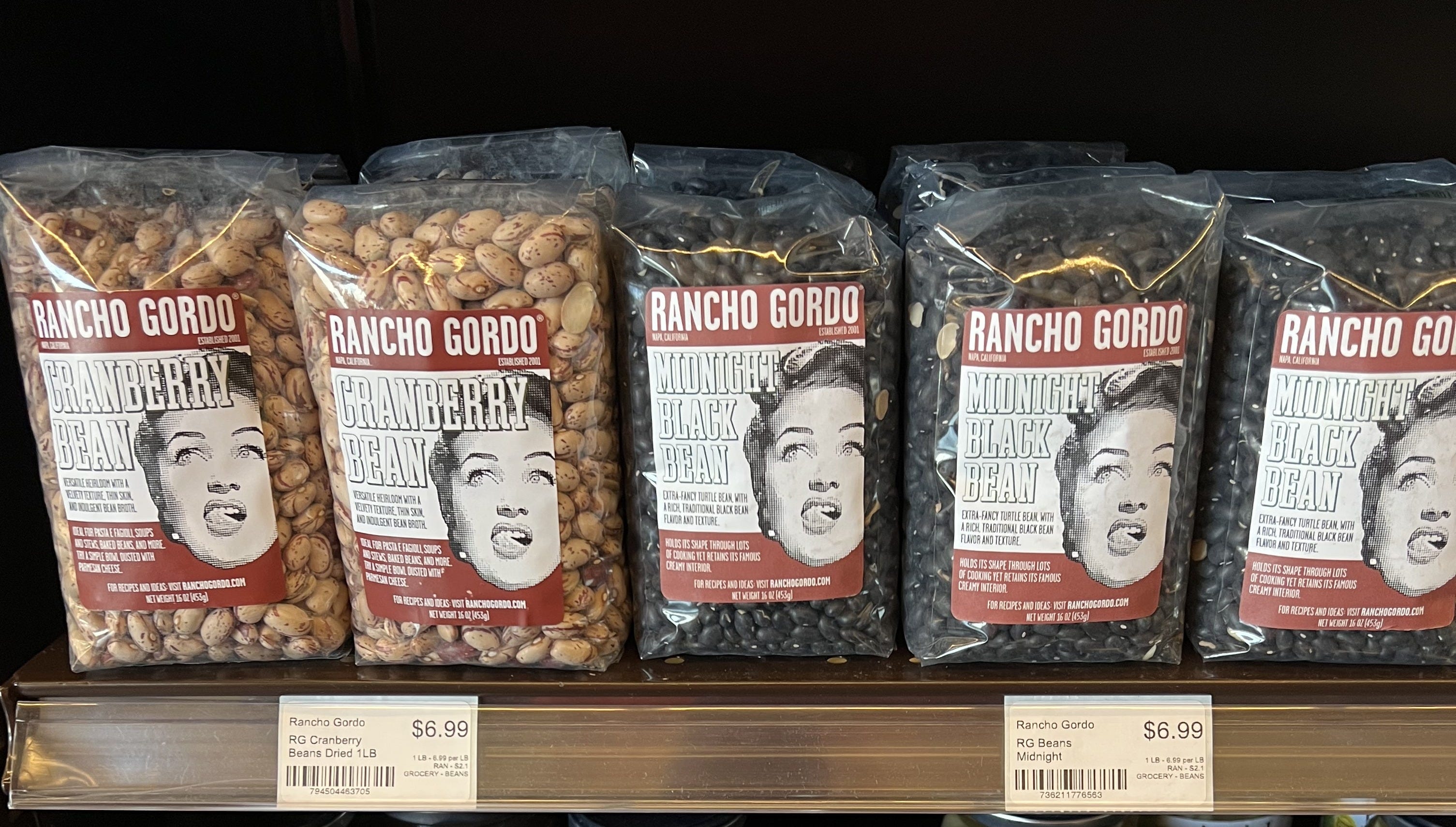
This is all to say that Rancho Gordo was a part of what I see as the greater bean reawakening in this country. Whilst growing up, I don’t remember seeing beyond a few varieties of dried beans at any given market. And companies like Rancho Gordo seem to have had a hand in changing that. Couple that with the influencer-fueled bean-industrial complex (see key figures such as Alison Roman, Laila Gohar, and the “soft-boy cooks”) and you’ve got a recipe for bean-o-mania.
Beans are popular not just because they’re in vogue, of course, they’re popular because they’re beautiful and tasty and healthy. At least when they’ve been cooked up and served right. So, how do you cook them up right? Well, once you’ve established you have good, fresh-ish dried beans, you can get started. And get started you should.


Rule 1 of beanery: dried is always best
Dried beans are superior. Canned/jarred beans work in a pinch for a quick “weeknight dinner,” but you’ll never achieve the silky, creamy texture of cooked-from-dry beans with canned.
Rule 2 of beanery: water is life
Always soak. Always, always soak. 6-12 hours. Can you get away with not soaking? Sometimes, sure. Sometimes you can cook beans from dry in two hours and it’s all gravy baby. But this has gone wrong in my experience 2/3rds of the time. I can’t handle that level of uncertainty, therefore I always soak. There are all manner of quick soak methods out there, but I don’t believe in quick soaking. I’d rather use the fact that I forgot to soak the beans as ammunition in my daily self-loathing cycle.
Rule 2.1 of beanery:
Always salt the soaking liquid. I don’t know that it actually accomplishes anything, but I feel that it does. Some say it helps the beans soften. Some recipes I’ve read will even call for the addition of baking soda to the soaking or cooking liquid. Baking soda’s alkalinity causes the beans to break down more quickly. This could help if you’ve got older beans, but it can result in an off flavor or a more mushy, skinless bean. I’ve only used baking soda during bean emergencies. There are also alkaline salts like this one, which you can use to get softening going.
Rule 2.2 of beanery:
Toss the soaking liquid and start with fresh water when cooking. And, if you live in an area with hard water, try to use filtered. It’ll make for a better cook.
Rule 3 of beanery: everything but the bean
Once you have your soaked beans, put them in a big ol’ pot. Dutch oven, stock pot, clay bean cooking vessel, whatever. You’re going to add just a few things to your beans; numbers 1 through 4 are all but required:
Salt: that’s right, more salt. Add a nice amount, but not too much, keeping in mind the liquid will reduce and become saltier as the beans cook. A good way to season beans is to add a little salt every 30 mins or so as they cook, tasting as you go to make sure you don’t over do it, because you can overdo it.
Fat: usually olive oil (the good stuff) in my beanery. More than you think, maybe; for one pound of beans, I’ll usually throw in about a ½ cup of oil. I feel that adding the oil during the cooking process somehow accomplishes something that couldn’t be added by just oiling at the end. Another classic bean fat: lard, maybe in the form of a ham hock or bacon.
Herb: at least a nice bay leaf or two. Ideally parsley stem, rosemary, really whatever you want.
Allium: for one pound of beans, half of a big yellow onion or an entire small one. And garlic. Whole peeled, at least four cloves.
Optional: as mentioned above, ham hock/bacon/salt pork are also classic pork-and-beans additions. Adding carrots and celery is also an option, as well as other herbs like thyme, sage, etc.
If you don’t feel like going fishing for a thyme sprig later on, you can use a piece of twine or a patch of cheesecloth to tie your herbs up together. They call this a bouquet garni in the biz.
Rule 4 of beanery: avoid the gut bomb
Cook the beans slowly and all the way. Until there is not a even a whisper of firmness to them. Undercooked beans are simply put, a gut bomb. Simmer gently, half-covered with lid askew or no lid at all, and always keep the beans covered with liquid. If you don’t, the skins will start to fly off. If need be, add more liquid as you go. And, as mentioned above, taste for seasoning as you go. If it needs salt, add a bit. When you think you might be getting close to the finish line, taste a bean. Then taste another. And another. Are all of them lovingly creamy, free of chalkiness? No firmness? Taste five beans. Are they all lovingly creamy? If not, keep simmering. If they’re silky, shut the heat off and let them cool in the liquid, or serve them immediately in their broth with a glug of good olive oil (yes, more), a hit of lemon or vinegar, and a piece of crusty bread.
These rules apply to all dried beans. At least all those that I can think of. If you happen to get your hands on fresh shelling beans, say a cranberry bean still in its pod or just freshly shelled, the same rules apply. However, you need not soak. Additionally, these fresh beans cook much faster than dried, so I like to use much less water when cooking and up the seasoning a bit.
Go forth in beanery.
Recommendation Station
The food stylings of Luca Guadagnino
I recently saw Luca Guadagnino’s latest, After the Hunt (2025). Despite middling reviews, I enjoyed it, if anything only for its beautiful depictions of a cozy, cold-weather locale. Something I love about Luca’s movies is that he loves to use food in his films. Sometimes it’s just a beautiful breakfast spread, there for our viewing pleasure. But the food cameos in his movies generally hold a symbolic value of some sort. The infamous peach from Call Me By Your Name (2017); the churros from Challengers (2024); the entire premise of Bones and All (2022).

Maybe it’s because I had beans on the mind, but while watching After the Hunt, I was stopped in my tracks by one dish in particular: cassoulet. Cassoulet is a French dish consisting of—depending on where and who you are—Tarbais beans, sausage, confit duck legs, and hunks of pork cooked separately, then baked or stewed together. Somewhere in the middle of the movie, Michael Stuhlbarg, the actor playing Julia Roberts’ husband, declares that he’ll be making cassoulet for dinner. He’s already established himself as an ambitious cook by this point in the film, but to make the notoriously involved dish in one day felt… iffy. Cassoulet, at least in my mind, is an event. It’s a party. Making a small cassoulet for weeknight dinner feels…crazy, especially if you don’t live walking distance to a French butchershop. I guess maybe that was part of the point? In a way, it seemed to signify the unrequited effort that Stuhlbarg put into the domestic aspects of their relationship. He probably spends an entire day making cassoulet, and then, of course, Roberts doesn’t show for dinnertime. The mention of cassoulet in the film also feels like a slightly ham-fisted attempt by Luca to display refinement and worldliness, an effort that pervades the film that (sometimes) falls a bit flat.
Cassoulet has been the white whale of white bean dishes for me for some time now. I’ve never tackled it. I wish I could say I’d done it for this newsletter, but I didn’t. If I do decide to make it, which I think I will soon, I’ll try to go for Luca’s quick pacing and see how far I get.
Some other nice things:
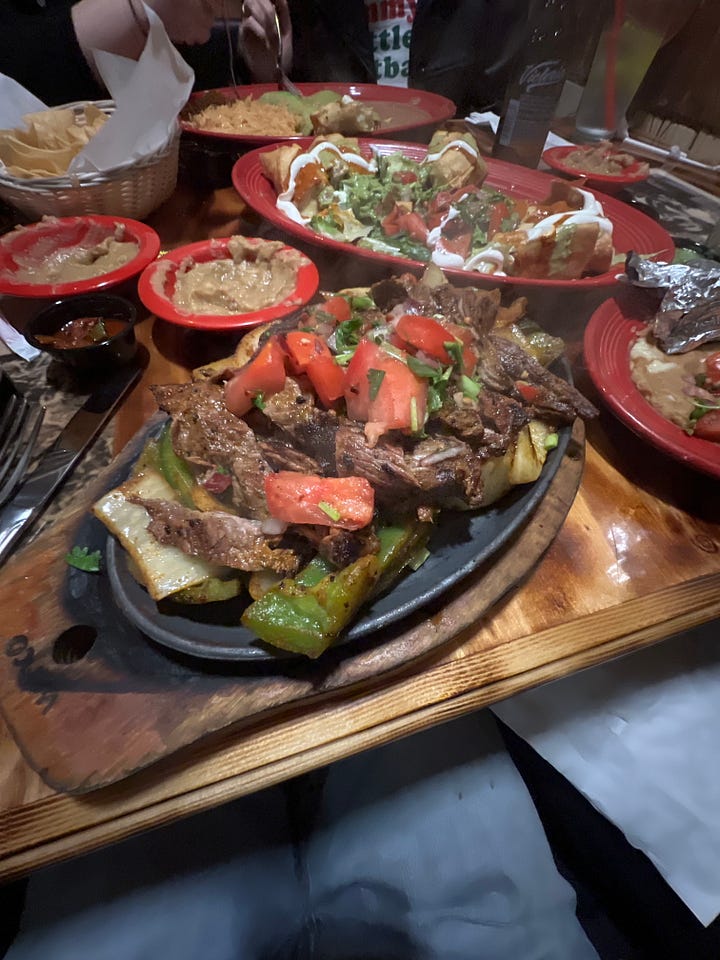
Bean dip. Really good, free bean dip at Salsa and Beer #2. Ignore the giant plate of fajitas, look at the half-eaten, sloshed-about bean dip.

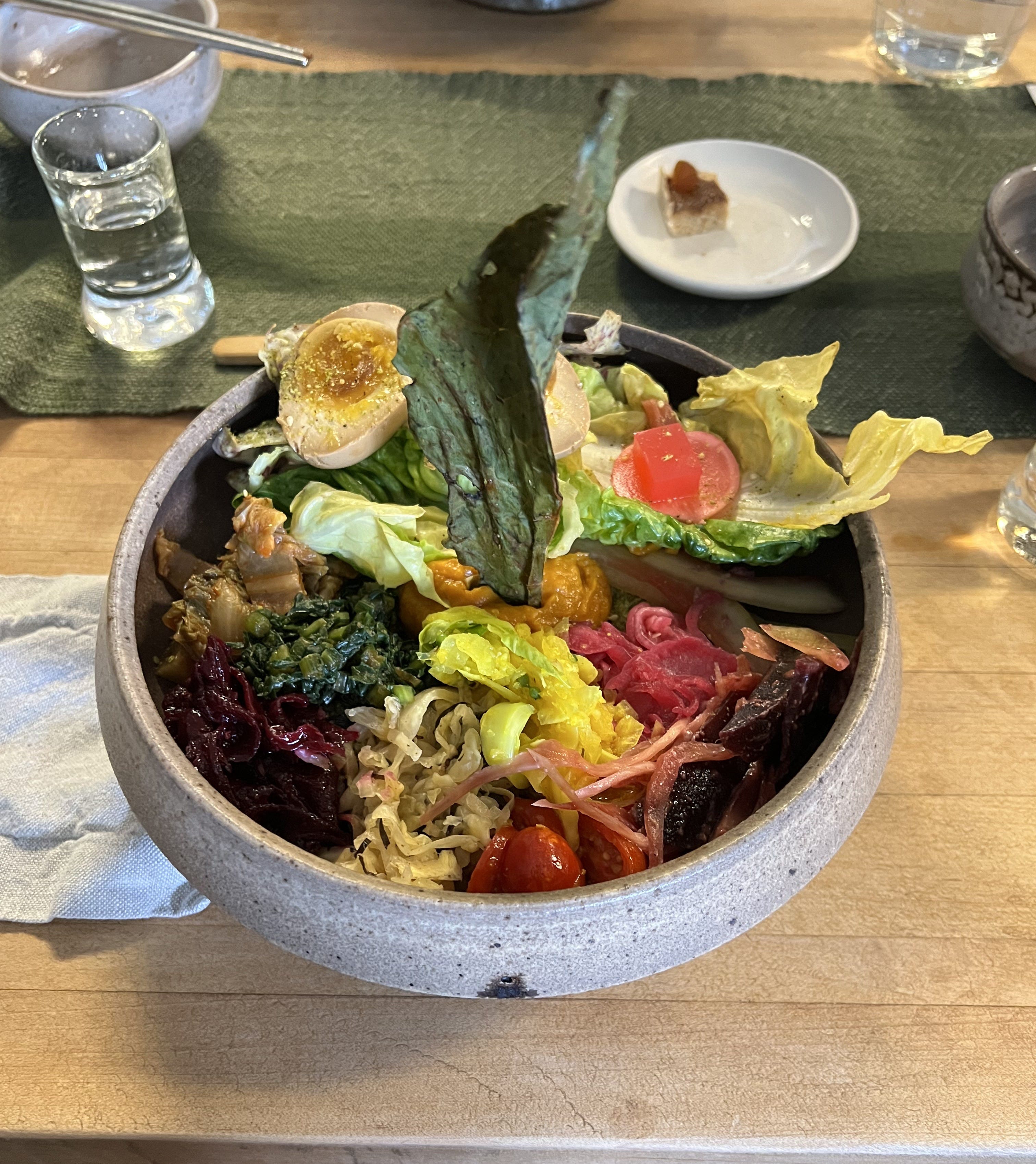
To the maestri at Cultured Pickle Shop, I salute you.


Thank you for reading. All posts are free.
I came for the bean wisdom and stayed for the hard hitting film criticism!
🙂↕️❤️🔥